
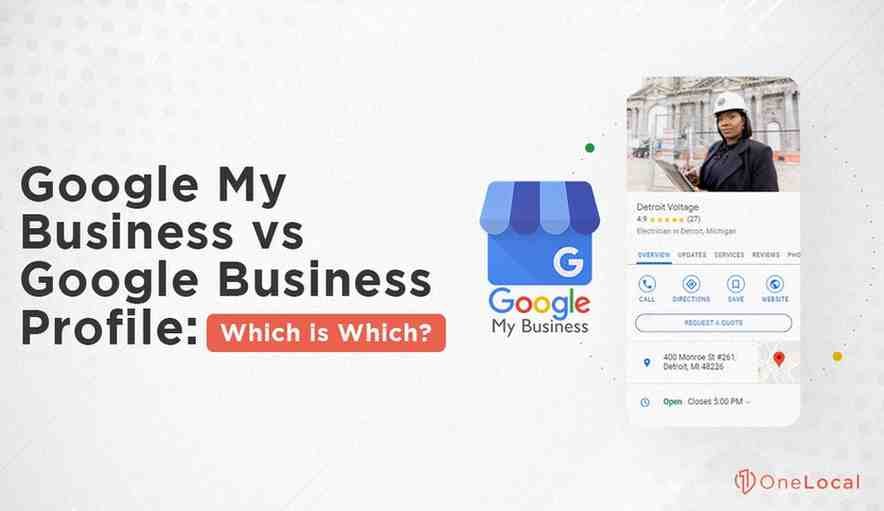
In 2025, your Google Business Profile (GBP) — formerly Google My Business — is no longer just a digital business card. It’s often the first (and sometimes only) touchpoint a potential customer has with your brand. Google reports that businesses with complete, active profiles see 2.7× more clicks and 70% more direction requests than inactive ones.
I’ve spent the last decade helping brick-and-mortar businesses — from single-location coffee shops to 50-store franchise chains — dominate the Google Map Pack and drive measurable foot traffic. This guide contains the exact advanced strategies my agency uses today to attract more visitors to Google Business Profiles, updated for Google’s latest algorithm signals as of Q4 2025.
Let’s dive in.
Why Optimizing Your Google Business Profile Is More Critical Than Ever
A well-optimized GBP now influences:
- Ranking in the Local Map Pack (the top 3 results on Google Maps)
- Visibility in voice search (“Hey Google, find plumbers near me”)
- Zero-click conversions (calls, messages, and direction requests directly from the profile)
- Trust signals that affect your website’s organic rankings
Businesses that actively manage their GBP see, on average, a 42% increase in customer actions (Google, 2025). Here’s how to make that happen.
The 3 Core Ranking Factors Google Uses in 2025
Google officially ranks local results based on:
- Relevance – How well your profile matches the searcher’s intent
- Distance – How close you are to the searcher (you can’t change this, but you can influence perceived service areas)
- Prominence – Brand signals, review volume/velocity, content freshness, and off-site authority
Master relevance and prominence, and you’ll consistently attract more visitors to your Google Business Profile — even if you’re slightly farther away than a competitor.
11 Advanced SEO Techniques to Attract More Visitors to Your Google Business Profile in 2025
1. Write a Keyword-Rich Yet Human Description (Without Keyword Stuffing)
Your 750-character business description is prime real estate.
Best practices in 2025:
- Front-load primary keywords in the first 250 characters (this is what shows in the knowledge panel).
- Use natural language — write for humans, not robots.
- Include secondary and long-tail keywords conversationally.
Example (Plumbing Company):
“Family-owned emergency plumber serving Seattle & Bellevue 24/7. Specializing in trenchless sewer repair, tankless water heaters, and drain cleaning. Same-day service guaranteed. Licensed, bonded & insured.”
No spammy repetition, yet packed with high-intent terms.
2. Nail Your Primary + Secondary Categories (Most Businesses Get This Wrong)
Your primary category is the single biggest relevance signal. Choose incorrectly, and you’ll never rank for your money terms.
Pro tip: Use tools like PlePer or GMB Crush to see exactly which categories your top-ranking competitors are using, then match or choose a more specific one when possible.
Add up to 9 secondary categories. A restaurant might add:
- Breakfast Restaurant
- Brunch Restaurant
- Coffee Shop
- Family Restaurant
This dramatically widens your reach.
3. Post Weekly — But Make It Strategic
Google rewards fresh content. Profiles that post at least once per week rank higher.
2025 posting strategy that works:
- 1 Offer post (limited-time deal)
- 1 Event post (even if it’s “Happy Hour Every Friday”)
- 1 Update post (new menu item, behind-the-scenes, staff spotlight)
- 1 Product post (for service businesses, highlight a specific service)
Include strong calls-to-action and geo-modified keywords in captions.
4. Achieve NAP Consistency at Scale
Name, Address, Phone (NAP) inconsistencies are still the #1 reason legitimate businesses get suspended or lose ranking power.
Use a local tracking number (not 800) and ensure 100% identical NAP across:
- Your website footer & contact page
- Google Business Profile
- Apple Maps
- Yelp, Bing, and 50+ other directories
Tools like BrightLocal or Yext make this painless.
5. Turn Reviews Into a Ranking Weapon
Review quantity, velocity, and quality remain massive prominence signals.
Advanced tactics that move the needle:
- Respond to every review within 24 hours — Google tracks response time.
- Naturally weave local keywords into 20–30% of responses (“Thanks for the kind words about our Seattle trenchless sewer team!”).
- Use review QR codes and SMS follow-ups to hit 10+ new reviews per month.
Aim for 8–12 new reviews monthly for maximum velocity boost.
6. Build a Visual Powerhouse with Photos & Videos
Profiles with 100+ photos get 42% more direction requests.
2025 photo strategy:
- Minimum 20 interior, 15 exterior, 10 team, 10 product/service-in-action photos
- Upload new photos weekly (even small changes)
- Use descriptive, keyword-rich file names: seattle-emergency-plumber-digging-2025.jpg
- Add 15–60 second videos with captions — Google is prioritizing video heavily
7. Fully Utilize Products & Services (With Rich Descriptions)
Stop treating the Products tab as an afterthought.
For service businesses:
- Create a “Service” for every major offering
- Write 300–500 character descriptions with keywords
- Add individual pricing when possible
- Link directly to relevant service-area landing pages
This often triggers rich snippets in the Map Pack.
8. Own the Q&A Section (Before Customers Do)
Pre-seed the 15 most common questions yourself from different Gmail accounts (Google allows this).
Example questions to answer:
- “Do you offer emergency same-day service?”
- “What areas of Seattle do you cover?”
- “Are you licensed and insured?”
Answer completely and conversationally. This controls the narrative and improves relevance.
9. Leverage Google Business Messaging Properly
Businesses using messaging see 3× more customer actions.
Best practices:
- Enable messaging and set up auto-replies for after-hours
- Aim for <5-minute response time during business hours
- Use saved replies for common questions
- Convert chats to reviews (“Would you mind leaving us a quick review?”)
10. Use Insights to Double Down on What Works
Check Insights weekly and look for:
- Which search queries are driving views?
- Which photos get the most views?
- What actions are people taking (calls vs. directions vs. website clicks)?
Create more of whatever performs best.
11. Build Location-Specific Landing Pages (The Hidden Ranking Turbocharger)
For multi-location or service-area businesses, create a dedicated page for every major city or neighborhood you serve.
Structure:
- Unique H1 with geo-keyword (“Emergency Plumber in Capitol Hill | 24/7 Service”)
- Embedded Google Map of that specific area
- Local phone number
- Testimonials from customers in that area
- Link directly from your GBP using the “Appointment” or “Learn More” link
Google treats these as massive relevance signals.
Final Thoughts: Treat Your GBP Like Your Most Valuable Storefront
In 2025, an unoptimized Google Business Profile is the equivalent of a physical store with dirty windows, no signage, and a “Closed” sign permanently hanging.
Implement these 11 advanced techniques consistently, and you’ll see measurable increases in profile views, direction requests, calls, and — most importantly — revenue.
Start with the low-hanging fruit: update your description, add 20 new photos, and post once this week. The momentum builds quickly from there.
Need hands-on help? I offer done-for-you GBP optimization and ongoing management — just reply or visit the contact form below.
Now go make your profile impossible to ignore.
James Carter is the founder of Local Boost Agency and has been named a Top 25 Local Search Influencer by BrightLocal three years running. His clients include national franchises and hundreds of independent businesses across 38 states.