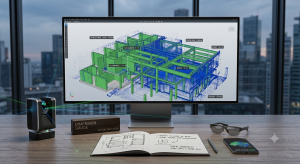
Top 7 Smart Measurement Gadgets and Spatial Tech Trends Changing 2026
 dimensiongauge
In 2026, the tech industry is shifting from purely software-driven AI toward spatial computing, micro-sensor integration, and ultra-precision hardware. Whether you are an architect, contractor, high-tech DIY enthusiast, or gadget lover, physical measurements are no longer bound by traditional tape measures or manual estimations.
From handheld LiDAR scanners to AI-assisted digital measure gauges, precision technology is becoming faster, smaller, and vastly more reliable. Here are the top smart measurement gadgets and spatial tech trends dominating the market this year.
Key Tech Trends Reshaping Precision Measurement in 2026
1. Embedded Spatial LiDAR in Everyday Devices
Apple and Samsung have standardized high-frequency LiDAR sensors across their flagship lineups. Beyond basic photography, these sensors now integrate directly with spatial measuring applications, allowing users to capture millimeter-accurate 3D floor plans simply by panning their devices across a room.
2. On-Device AI for Real-Time Calibration
Unlike older tools that required manual zero-adjustments, 2026's smart measuring devices utilize edge AI chips. These chips automatically account for ambient thermal expansion, atmospheric pressure shifts, and surface reflectivity to guarantee exact readouts in extreme environments.
Top Smart Measurement & Spatial Gadgets of the Year
| Gadget Category | Top Primary Feature | Target Audience | Primary Advantage |
| Laser Distance Gauges | Bluetooth 5.4 + CAD Sync | Contractors & Architects | Instant floor-plan generation |
| Handheld 3D Scanners | Sub-millimeter Point Clouds | Engineers & 3D Modelers | Rapid physical-to-digital rendering |
| Smart AR Measuring Glasses | Real-Time HUD Overlay | Interior Designers & DIYers | Hands-free visual dimensions |
| Ultrasonic Surface Detectors | Sub-surface Density Mapping | Home Inspectors | Detects hidden wall structural shifts |
1. Next-Gen Bluetooth Digital Laser Gauges
Modern laser distance meters do far more than shoot a beam and give a single distance. Today's top-tier models store thousands of metrics, calculate volume automatically, and sync directly via Bluetooth to BIM (Building Information Modeling) software on mobile devices or laptops.
- Why it matters: Eliminates human error during site measurements and saves hours of manual drawing entry.
2. Pocket 3D Spatial Scanners
Compact 3D scanners allow users to sweep physical objects—from complex car parts to dynamic interior spaces—and convert them instantly into CAD-ready STL or OBJ files.
- Why it matters: Unlocks true rapid prototyping and reverse engineering capability without requiring expensive lab equipment.
3. AR-Powered Smart Glasses for Hands-Free Measurement
Smart eyewear has moved into industrial utility. By overlaying augmented reality dimensions onto real-world objects, workers can view precise height, depth, and spatial clearances in real time through their field of vision without touching a single tool.
Frequently Asked Questions (FAQs)
Are smart digital laser measuring tools accurately replacing manual tape measures?
Yes. Modern laser gauges maintain margin-of-error ratings under ±1.0mm over long distances, vastly outperforming traditional physical tapes which are prone to bending, sagging, and human misreading.
How does LiDAR technology assist in architectural spatial design?
LiDAR measures distance by emitting light pulses and recording the time it takes for them to bounce back. In architectural design, this creates high-density "point clouds" that accurately capture complex 3D rooms and geometries instantly.
Do I need internet access to sync spatial data from smart measurement tools?
Most modern measurement tools utilize offline storage and direct Bluetooth or local Wi-Fi connections, allowing instant syncing to smartphones or tablets even on remote job sites without active cellular service.
Final Thoughts
Precision engineering and consumer tech have officially converged. Upgrading to smart spatial measuring gadgets isn't just about saving time—it’s about eliminating structural guesswork and optimizing workflows with real-time digital integration.